

Should You Leave a Sheet Mask on Until It Dries? What Dermatologists Say
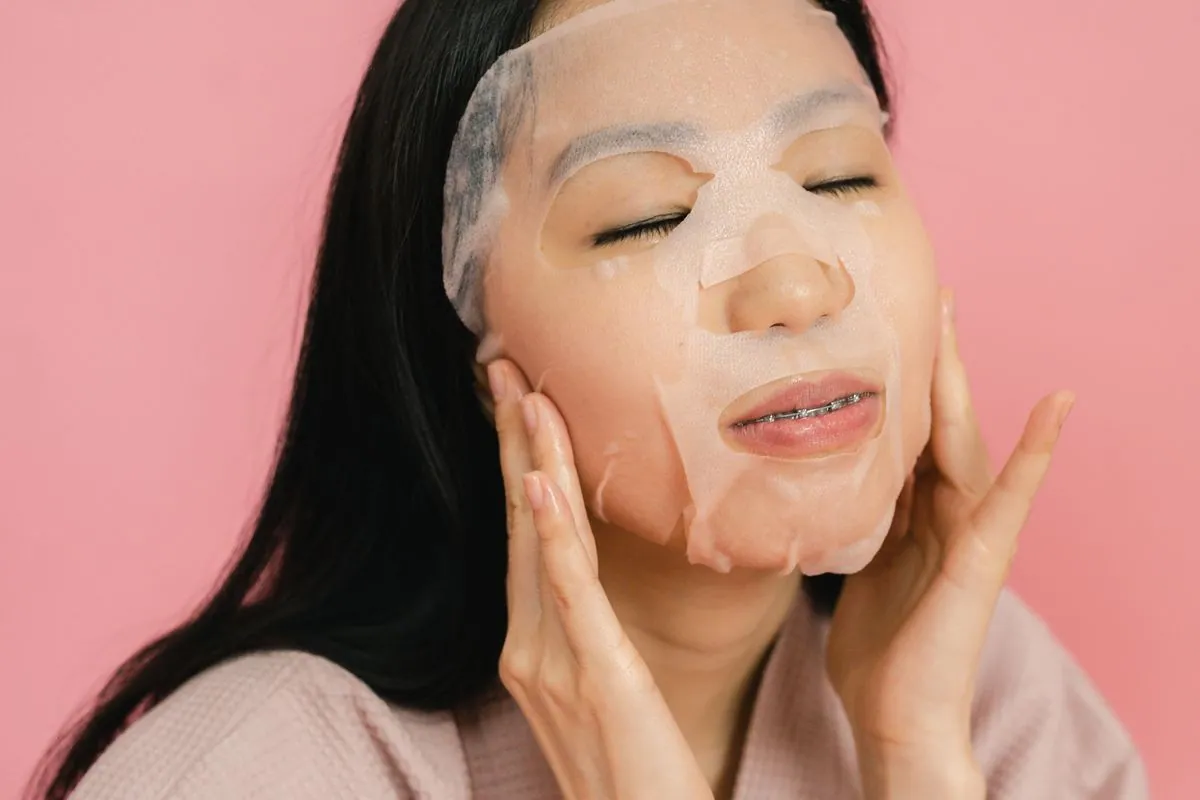
No, letting a sheet mask sit on your face until it dries out does not give you better results. Dermatologists who write about sheet masks largely agree on one thing: once the fabric dries, usually somewhere around the 15 to 20 minute mark, it stops delivering hydration and can start pulling moisture back out of your skin instead.
Why a Dried-Out Mask Works Against You
A sheet mask works by occlusion. The fabric holds a serum against your skin and slows down the normal evaporation of water from the surface, so the essence underneath stays in contact with your skin longer than it would if you just patted it on and let it air dry. New York dermatologist Jane Yoo, who writes about Korean beauty routines on her own site, explains that the effect only runs one way while the sheet itself is still wet.
Dermatologist Jane Yoo writes: avoid leaving it on until it dries completely, since a dry mask may begin pulling moisture back out of the skin.
So How Long Should You Actually Leave It On?
The instructions on your specific mask are the most reliable guide, since formulas vary, but most dermatologist advice lands in the same narrow window. Yoo points to a recommended period of 15 to 20 minutes for most masks. The American Academy of Dermatology does not publish its own universal number for sheet masks specifically, and instead tells people to follow the timing printed on the product label. Dermatologist Lauren Fine, writing for the AAD, warns that leaving a facial mask on longer than intended, or using one too often, can cause irritation. If your skin starts to sting, itch or burn while a mask is on, the AAD's guidance is to wash it off right away rather than wait out the clock.
A Sheet Mask Won't Rebuild Your Skin Barrier
It is worth being honest about what 15 to 20 minutes under a damp sheet can and cannot do. Yoo writes that this short occlusion period, combined with the concentration of actives typically found in a sheet mask, is not long enough to meaningfully stimulate collagen production, improve pigmentation or rebuild the skin barrier. She also notes that sheet masks do not treat acne. Think of a sheet mask as a short, pleasant hydration boost rather than a stand-in for the rest of your routine, actives included.
How Often You Should Mask Depends on What's in It
For plain hydration, Yoo suggests 2 to 3 sheet masks a week is enough for most skin types. New York City dermatologist Carmen Castilla, speaking to the telehealth platform Zocdoc, adds that a hydrating sheet mask is meant to sit alongside a normal routine rather than replace it.
Hydrating sheet masks are an additive, not a replacement to your skin care routine, Castilla says.
Castilla says hydrating masks can be used more often than that, even daily, but masks built around glycolic acid or retinol should be limited to about once a week, since overdoing those ingredients raises the risk of irritation or a rash, especially on skin that is already sensitive or eczema-prone.
Watch for Allergies, Not Just Overuse
Timing isn't the only risk dermatologists flag. Castilla told Zocdoc that fragrance and preservatives called parabens, both common in sheet mask formulas, are behind many of the skin reactions she sees in her own patients.
I have seen a significant number of contact allergies to sheet masks, Castilla says.
That has made her hesitant to recommend sheet masks broadly, though she notes that people who already use them without any reaction do not need to stop. Dermatologist Suleima Arruda, who sits on the medical advisory board for the skincare brand WeThrivv, adds that anyone whose skin is still sensitive after a cosmetic procedure should check with their own doctor before working a sheet mask back into their routine.
What to Do the Moment You Peel It Off
Aftercare matters almost as much as timing. Yoo recommends patting the leftover essence into your skin rather than rinsing it away, then following with a moisturizer to help seal in what the mask left behind. The AAD gives similar guidance for facial masks in general: apply your moisturizer after washing off the mask, then carry on with the rest of your routine, sunscreen included. Castilla frames it slightly differently, saying a moisturizer with occlusive properties should follow a hydrating sheet mask to lock that water in rather than let it evaporate straight back out.
None of this depends on which brand of sheet mask is sitting in your skincare drawer. Set a timer for 15 to 20 minutes, take the mask off while it is still damp rather than waiting for it to curl at the edges, and finish with a moisturizer. That is the entire difference between a mask that hydrates your skin and one that quietly works against it.
Source: https://www.janeyoomd.com/k-beauty/do-sheet-masks-actually-work-a-dermatologist-explains/