

Does the "Functional Cosmetic" Label on Korean Skincare Actually Mean Anything?
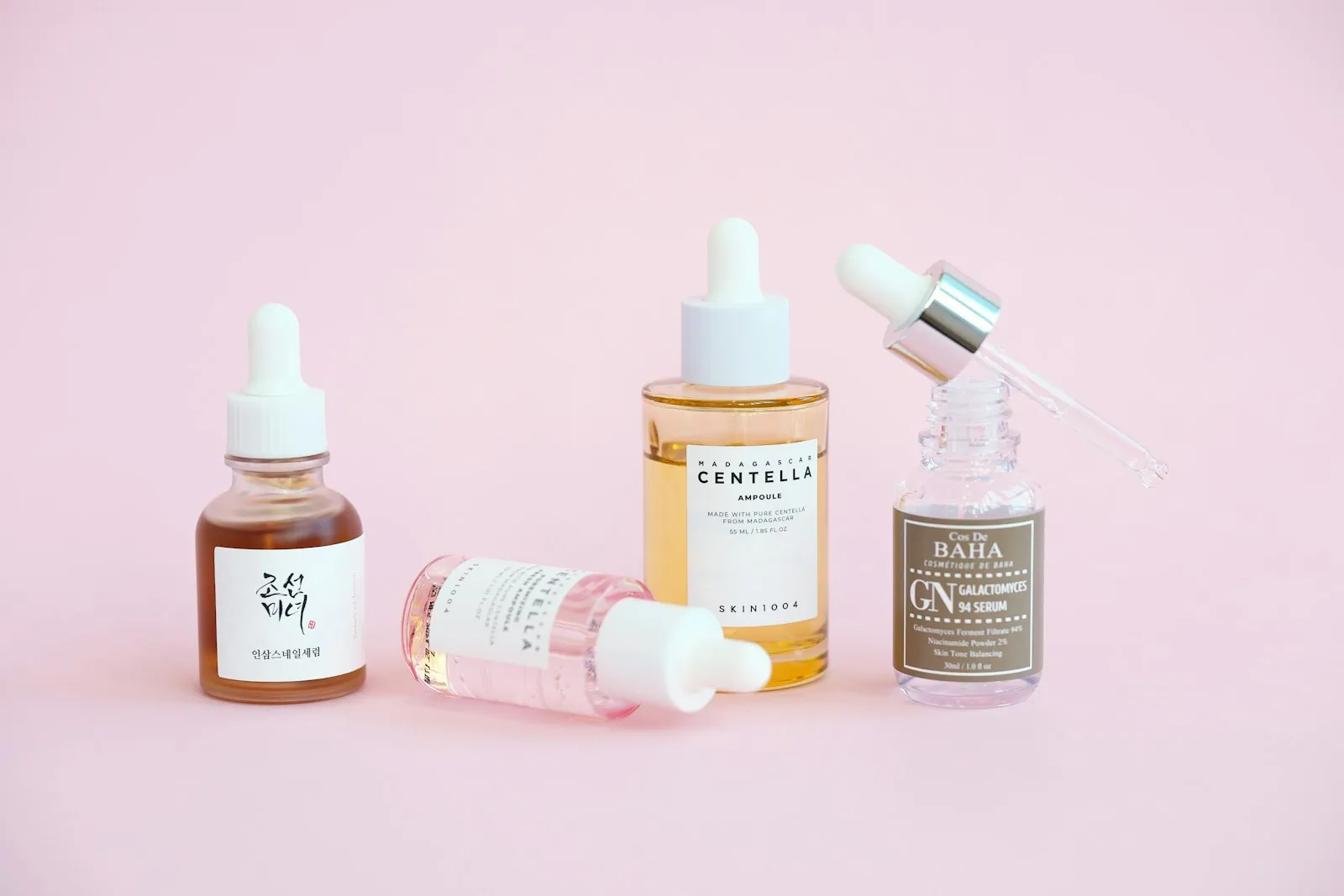
"Functional cosmetic" is not a marketing flourish on Korean skincare packaging. It is a legal status under Korea's Cosmetics Act, and a product only earns it after clearing a check with the Ministry of Food and Drug Safety, the government body that oversees cosmetics, drugs and food safety in Korea. Any product that claims to whiten skin, smooth wrinkles, protect against UV rays, dye hair, treat hair loss, calm acne through a rinse-off cleanser, soothe the dryness linked to atopic-prone skin or fade the red lines left by stretch marks has to clear that check first. Everything else sold in Korea counts as a "general cosmetic," and it carries no such requirement.
What Actually Counts as "Functional"
Per the Ministry of Food and Drug Safety's own published guidance, the list of covered claims is narrow and specific rather than a general stamp of approval. On the skin side, that covers two distinct whitening claims, preventing new melanin pigmentation and fading pigmentation that is already there, plus wrinkle improvement, gentle tanning or UV protection, acne relief limited to rinse-off cleansing products, relief from the dryness linked to atopic-prone skin and the fading of red stretch mark lines. On the hair side, it covers permanent hair dye, bleaching or dye-removing products, anti-hair-loss products that work through more than just adding bulk with fibers or styling tricks and hair removal that works without physical methods like shaving or waxing. A moisturiser that simply promises "hydration" or a serum that promises "glow" sits entirely outside this list, however convincing the packaging looks, because those are not functions the law singles out this way.
Who Actually Checks the Claim Before You Can Buy It
Under Article 4 of the Cosmetics Act, a company that wants to sell a functional cosmetic in Korea has two routes. If its formula, active ingredient and claimed function already match something the Ministry of Food and Drug Safety has evaluated and logged before, often because the ingredient is listed in Korea's Functional Cosmetics Codex, it can file a report rather than go through a full evaluation. That report carries no fee and is usually processed the same day. If the formula or ingredient is new, the ministry runs a full evaluation instead, reviewing the product's safety data, the evidence behind the specific function being claimed and its tested SPF, water resistance and PA (UVA protection) ratings for sun care products. The standard review period for a full evaluation is 60 days, and since March 2019 that evaluation route has also been open to universities and research institutes applying directly, not only the companies selling the finished product.
The ministry also publishes how much of this activity actually happens. In the first half of 2024, Korea's National Institute of Food and Drug Safety Evaluation logged 572 functional cosmetic evaluations, up from 524 in the same period the year before, according to data the institute released that July. UV protection was the single largest category on its own, covering 169 of the evaluations, ahead of hair dye, bleaching and dye-removing products combined at 143. Whitening and wrinkle improvement were smaller categories individually, but showed up constantly in combination: 93 products that stacked whitening, wrinkle improvement and UV protection together cleared evaluation as one "triple-efficacy" product in that half year alone.
What the Label Doesn't Promise
Clearing this process confirms that the specific claimed function, and only that function, met Korea's evidence bar. It is not a blanket safety certificate for every ingredient in the bottle, it does not replace patch testing on your own skin and it is not a judgment on how the product feels or performs beyond the one claim it was evaluated for. It is also a Korea-specific status rather than a global one. Other markets run their own systems for the same kinds of claims, so a UV filter approved for a Korean "functional cosmetic" sunscreen is not automatically the same filter cleared for sale somewhere else.
Why It's Worth Knowing If You Shop From Abroad
If you buy Korean skincare through YesStyle, Stylevana, StyleKorean or Olive Young, a product's functional cosmetic status reflects its original registration for the Korean market rather than a certification that automatically travels with it to wherever you live. It is still a useful signal. It means that specific brightening, wrinkle or sun care claim cleared a government review before the product reached shelves in Korea, which is a higher bar than an ordinary beauty claim faces in many markets. Read it as exactly that: evidence behind one specific claim on the label, not a seal of approval for the whole product or a substitute for checking what actually works for your own skin.
Source: https://www.mfds.go.kr/eng/wpge/m_24/de011005l001.do