

Gua Sha vs Jade Roller: What a 2025 Clinical Trial Found They Actually Do for Your Face
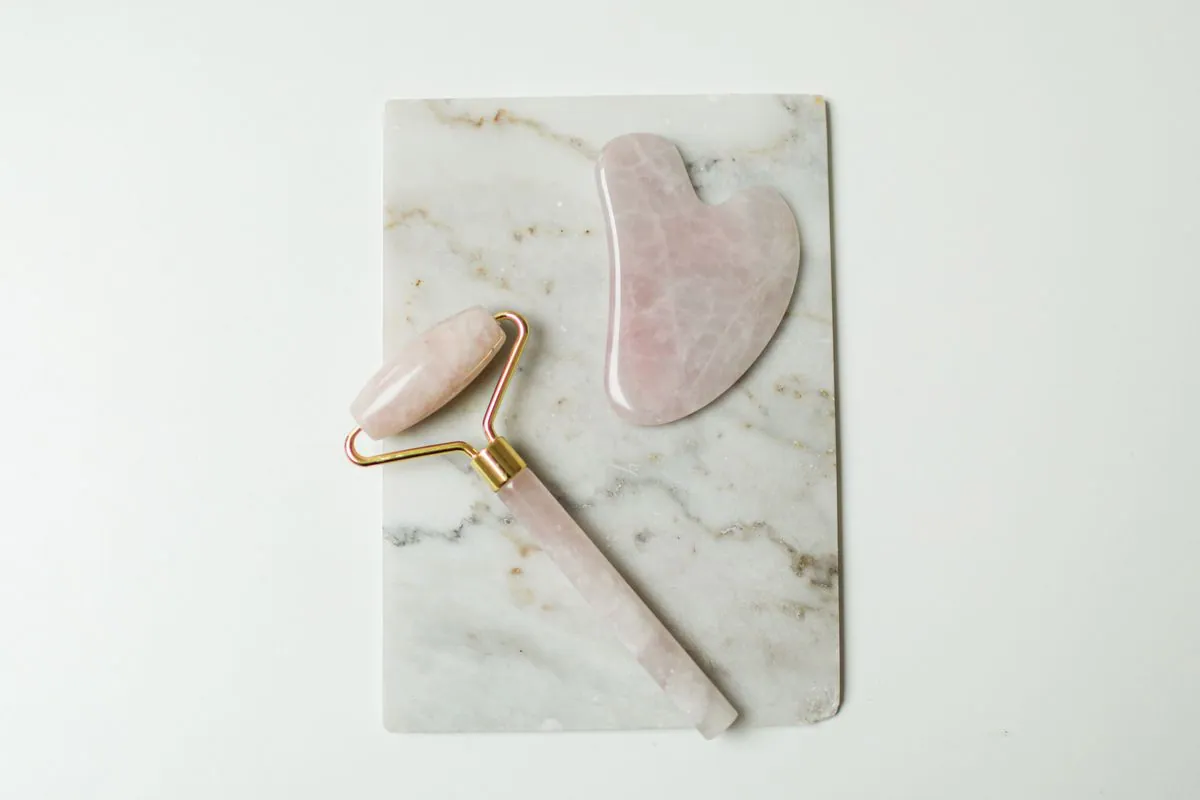
Gua sha and jade rollers do not do the same thing to your face, according to the first randomized trial to test them against each other. A 2025 study found that gua sha improved muscle tone while the roller improved skin elasticity, and neither tool produced the permanent contouring effect that keeps circulating on social media.
What These Tools Are Actually Doing When You Use Them
Both tools work the same basic way. You drag a smooth stone, usually jade, rose quartz or stainless steel, across the skin with light to moderate pressure, which temporarily increases blood flow and can encourage lymphatic drainage. Dermatologist Jane Yoo, a board certified dermatologist and Mohs surgeon who practices in New York, describes the mechanism behind gua sha as mechanical rather than magical: pressure and friction, not any special property of the stone itself.
That is also why the stone material does not matter clinically. Jade, rose quartz and steel tools apply pressure in the same way, so the choice between them comes down to preference and price rather than any proven difference in results.
The Study That Finally Tested Gua Sha Against a Roller
Most claims about facial tools have rested on anecdote or on a single widely cited 2007 pilot study that applied firm pressure to the backs of 11 healthy adults, not the face, and had no comparison group. A trial published in June 2025 in the Journal of Cosmetic Dermatology closed that gap by testing gua sha against a facial roller directly, on the face, with a control for comparison between the two tools.
Researchers recruited 34 women aged 20 to 50 in Seoul and Gyeonggi-do between April and July 2024. Seventeen used a gua sha tool and seventeen used a facial roller, each trained on technique beforehand and applying facial oil during every session. Participants kept their normal skincare routine and added no new products. Over eight weeks, each group did ten minute sessions five times a week, around 40 sessions in total. Researchers measured skin elasticity with a Cutometer and muscle tone with a device called MyotonPRO that tracks oscillation frequency and stiffness.
Gua Sha Changed Muscle Tone, the Roller Changed Elasticity
The two tools produced genuinely different results. Only the gua sha group showed a statistically meaningful drop in muscle oscillation frequency and dynamic stiffness, both measures of muscle tone, suggesting the deliberate, angled pressure of a gua sha stone affects underlying muscle in a way light rolling does not.
Only the facial roller group showed improved skin elasticity, with gains in both gross and biological elasticity. The gua sha group showed no measurable change on that specific metric. In other words, each tool did something, just not the same thing, and not everything people assume it does.
The authors themselves flagged the limits of their own data: 34 participants in one city over eight weeks is a small, narrow sample, and they called for longer studies with more diverse participants before drawing firm conclusions.
What Neither Tool Does
Neither the new trial nor any dermatologist commentary on it supports the idea that gua sha or jade rolling permanently reshapes bone, dissolves fat or sculpts the jawline for good. Yoo is blunt about this gap between marketing and mechanism: any slimming or contouring effect you see right after a session is temporary, driven mostly by reduced fluid retention around the eyes and jawline that fades again within hours. No study has shown that facial gua sha stimulates collagen production or detoxifies the skin, claims that still show up regularly in product marketing.
Who Should Be Careful With Facial Tools
Dermatologists advise skipping gua sha or rolling over active breakouts or visibly inflamed skin, since added pressure can spread bacteria or worsen irritation. Rosacea prone skin can flush or flare from the friction and circulation changes, and visible broken capillaries can look worse under added pressure. Anyone who has had injectables recently should check with their provider before resuming facial tools, especially in the first few weeks after treatment.
How to Use One Properly
Always work over a slippery base, a facial oil or a rich serum, never on dry skin, since dragging a stone across bare skin risks friction and micro tearing. Use light, upward and outward strokes rather than pressing hard, and keep sessions brief, a few minutes is enough. A few sessions a week is a reasonable starting point for most people: daily use is not necessary for de-puffing and can increase irritation on sensitive skin.
If your goal is a quick, temporary de-puff before a photo or an event, either tool can deliver that. If you are hoping for lasting contouring or collagen stimulation, the current evidence, including the most rigorous test to date, does not back that up.