

What Is PDRN in Korean Skincare, and Is It Actually Worth Trying?
PDRN stands for polydeoxyribonucleotide, a purified DNA fragment that's usually extracted and processed from salmon milt, and it's the ingredient behind the newest wave of Korean serums promising to work the way an injectable skin booster does, minus the needle. It's been used in Korean medical aesthetics for years in injectable form and has now moved into shelf skincare, showing up in serums, ampoules and sheet masks from brands like COSRX, Anua and Rejuran.
Where PDRN Came From Before It Was a Serum
Despite the nickname salmon DNA, what actually goes into these products isn't raw fish tissue. PDRN is purified and fragmented in a lab, and the salmon sourcing just refers to where the original DNA strands came from before processing. In Korea, that purified form has a long run in medical settings, where it's been studied and used for tissue repair and wound care, mostly through injection rather than topical application.
That clinical reputation is exactly why it jumped into skincare. Brands are now putting PDRN into serums at cosmetic concentrations and framing it as a gentler, at-home version of a dermatologist treatment. Some formulas skip salmon altogether and use plant or microbial DNA instead, marketed as vegan PDRN, so it's worth checking the ingredient list if sourcing matters to you.
PDRN fits into a pattern K-beauty shoppers already know well. Snail mucin, peptides and PDRN all got their start as something else, cosmetic dermatology, medical treatment or lab research, before skincare brands adapted them into everyday serums. PDRN is the newest of the three to make that jump at scale, which is part of why it still feels less familiar than an ingredient like niacinamide that's been a drugstore staple for years.
What's Actually in a Bottle Right Now
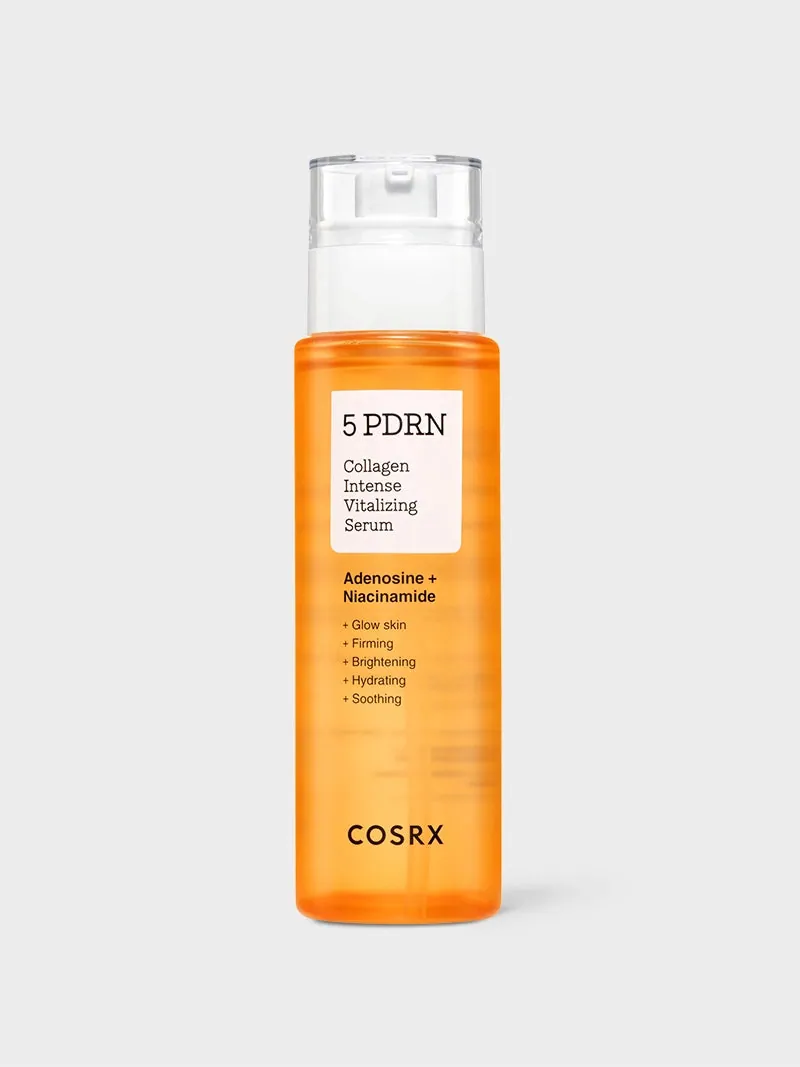
COSRX's 5 PDRN Collagen Intense Vitalizing Serum is one of the more visible examples. It blends five PDRN sources, salmon, centella asiatica, rice, lactobacillus and green caviar, with hydrolyzed collagen, eight forms of hyaluronic acid, niacinamide and adenosine. It sells for $24.30 on StyleKorean in a 100ml bottle, a 10 percent discount off the $27 list price, and runs about $25 directly through COSRX's own site.
It isn't the only option on shelves. Anua sells a KDH PDRN Hyaluronic Acid Capsule 100 Serum, and Rejuran, the brand most associated with PDRN's clinical roots in Korea, has a Turnover Ampoule with a cosmetic c-PDRN concentration retailing around $52 for 30ml through Olive Young's Sephora edit. The spread in price says a lot about how PDRN is being marketed right now, from accessible drugstore serums to prestige ampoules leaning on the ingredient's clinic reputation.
Does It Actually Work on Skin?
This is the part worth being honest about. PDRN's track record in wound healing and tissue repair comes almost entirely from injectable, clinical use, not from topical application at the concentrations found in a $25 serum. Independent reviewers have pointed out that most PDRN skincare brands don't disclose the actual percentage used in their formulas, which makes it hard to know how much of that clinical reputation actually transfers to a bottle you apply with your hands.
That doesn't make PDRN serums useless, it just means the honest framing is supportive rather than transformative. Treat it the way you'd treat any newer, still-developing ingredient: a nice addition to a routine that's already built around sunscreen, a real moisturizer and gentle actives, not a replacement for any of them. If your skin already tolerates niacinamide, hyaluronic acid and centella extract without issue, a PDRN serum layered in the same step shouldn't cause problems.
It also helps to separate the ingredient from any one brand's marketing copy. Product pages for PDRN serums tend to lean on phrases like clinically proven or dramatic firming results, often citing small self-assessed studies rather than independent, peer-reviewed research. Read those claims as a starting point for curiosity rather than a guarantee, the same way you'd read any skincare marketing.
How to Use a PDRN Serum in Your Routine
Most PDRN serums, including COSRX's version, are designed to go on cleansed skin in the serum step, before a moisturizer seals everything in. COSRX markets its formula as suitable for normal, dry, combination and sensitive skin types, and describes it as lightweight and fast absorbing rather than heavy or sticky. As with any new ingredient, it's worth patch testing on your inner arm or jaw for a couple of days before working it into your full face routine, especially if you're combining it with other actives like retinoids or exfoliating acids.
If you're curious but don't want to commit to a full size bottle right away, most of the PDRN serums on the market, including the COSRX and Anua options sold through StyleKorean, come in standard 50ml or 100ml sizes rather than minis, so budget for a full purchase rather than a trial size. It's a genuinely interesting ingredient with real clinical history behind it, it's just a history that belongs mostly to a needle, not a dropper, so keep your expectations calibrated to that while you try it.
Source: https://www.stylekorean.com/product/cosrx-5-pdrn-collagen-intense-vitalizing-serum-100ml/1762246029