

Why So Many Beauty Brands, Rare Beauty Included, Are Secretly Made in the Same Korean Factories
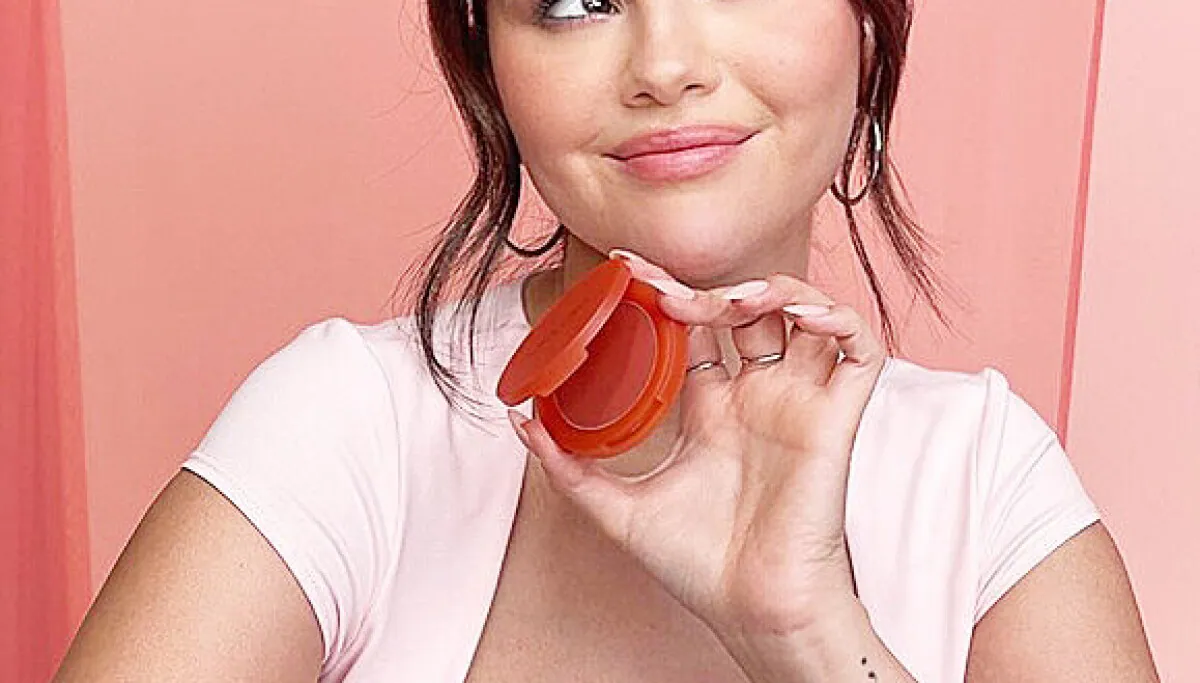
Compare the finish on a dozen different Korean serums, or hold a Rare Beauty cushion compact next to a small Seoul lip tint brand you have never heard of, and you may be looking at work from the exact same factory floor. A small cluster of Korean manufacturers called ODMs, short for original development manufacturers, physically build the products behind hundreds of beauty labels at once, Korean and Western alike, and 2026 has turned into their most profitable year on record.
What Is an ODM, and Why Does It Run So Much of K-Beauty?
An ODM develops a formula, sources the packaging and runs the production line, then sells the finished, ready-to-label product to a brand that may never touch a lab. That is different from a factory that simply fills a recipe a brand already owns. According to Korea JoongAng Daily, Korea's four largest ODMs, Kolmar Korea, Cosmax, Cosmecca Korea and C&C International, serve more than 10,000 clients between them and post combined annual revenue above 6 trillion won. The newspaper's reporting describes them as functioning for beauty the way TSMC functions for computer chips: the brand supplies the idea and the marketing, the ODM supplies everything else.
The Korean Factory Behind Selena Gomez's Rare Beauty
C&C International, a Korean ODM, makes more than half of Rare Beauty's color cosmetics at its plants in Korea, and also supplies Yves Saint Laurent Beauty and Dior Beauty, according to Korea JoongAng Daily. The newspaper reported that Gomez's team approached C&C in 2019 after learning the company also manufactured for the Korean brand 3CE. Rare Beauty launched in 2020 and has since been reported to be valued at about $2.7 billion. C&C's own revenue reflects that growth: Korea JoongAng Daily put it at 282.9 billion won, roughly $215 million, in 2024, more than triple its 81.6 billion won in 2019.
How a One-Person Brand Launches in Months, Not Years
Speed is the other reason brands keep showing up seemingly overnight. Citing Los Angeles Times reporting, Korea JoongAng Daily wrote that Korean ODMs can take a new product from concept to finished goods in three to six months, against one to three years at many competitors elsewhere. The newspaper's example was BMcos, a small Korean brand founded by a former office worker, which launched its BRMud clay mask with Kolmar Korea in June 2021. About 80 percent of BMcos's sales are now overseas, and the company was projecting roughly 30 billion won in revenue the following year. The article also cited a long-standing policy at Kolmar Korea, attributed to its founder, of giving each client its own formulation rather than reselling an identical recipe to competitors, which is part of why brands sharing a factory still end up with different products on the shelf.
Why the Factories Just Had Their Best Quarter Yet
The Asia Business Daily reported on August 12, 2026 that all three of Korea's largest listed ODMs set quarterly records in the April to June period. Kolmar Korea's consolidated sales rose 17.9 percent year on year to 861.3 billion won, with operating profit up 50.2 percent to 110.3 billion won. Cosmax posted record quarterly sales of 794.9 billion won, up 27 percent, and operating profit up 21 percent to 73.7 billion won, with its long unprofitable United States subsidiary logging an operating profit for the first time since it was founded. Cosmecca Korea's sales rose 39.8 percent to 226.1 billion won.
Cosmax's all-time quarterly results were possible thanks to strong performances across regions.
That assessment came from Yuanta Securities analyst Seung Eun Lee, quoted by The Asia Business Daily. Analysts cited in the same report pointed to rising demand in the United States and Europe, plus a wave of Korean indie brands expanding abroad without factories of their own, as the main drivers. A follow-up Herald Business report on October 21, 2026 noted that Cosmax's and Kolmar's American units, which had long lost money, are starting to turn a corner as more brands send them orders.
The Numbers Behind the Boom
The order surge shows up in national export data too. South Korea's cosmetics exports reached $7 billion in just the first half of 2026, up 27.3 percent year on year and a record for a first half, according to Ministry of Food and Drug Safety figures reported by The Asia Business Daily on September 14, 2026. That already topped 60 percent of all of 2025's $11.4 billion in exports. The same report said the three ODMs are racing to add capacity: Cosmecca Korea is investing roughly 200 billion won total in a new production complex in Ochang, Kolmar Korea pulled out of a Beijing plant to build a new one in Sejong due by 2028, and Cosmax is expanding its Shanghai site while building new plants in Thailand and Indonesia, pushing its global capacity toward 4 billion units a year.
What It Means Next Time a New Brand Pops Up on Your Feed
None of this means two brands' products are secretly identical, Kolmar's one-formulation-per-client approach and each ODM's in-house research teams are built to prevent that. What it does explain is why a small Korean skincare label, or a celebrity's debut makeup line, can arrive with polished packaging and a finished formula within a matter of months, and why certain ingredients or textures seem to spread across many different brands at roughly the same time. The next time a brand new name shows up with suspiciously fast turnaround and a familiar-feeling formula, there is a reasonable chance the real story is happening a few production lines away in Korea, not inside that brand's own lab.